Have you ever wanted to start trading in the stock market but didn’t know where to begin? You’re not alone. Every year, millions of beginners enter the stock market hoping to grow their wealth, but many lose money because they start without proper knowledge, discipline, and risk management.
The good news is that successful trading isn’t about luck—it’s about learning the right fundamentals, understanding how the market works, and following a proven strategy.
In this comprehensive beginner’s guide, you’ll learn everything you need to know about stock market trading in 2026, including how the market works, the difference between trading and investing, various trading styles, common beginner mistakes, and practical steps to start your trading journey with confidence.
What You’ll Learn in This Guide
- What is the Stock Market?
- How the Stock Market Works
- Understanding NSE and BSE
- Types of Stock Market Trading
- Trading vs Investing
- How to Start Trading Step-by-Step
- Risk Management Basics
- Common Beginner Mistakes
- Frequently Asked Questions
What is Stock Market Trading?
Stock market trading is the process of buying and selling shares of publicly listed companies with the goal of earning a profit from price movements. Every day, millions of investors and traders participate in the stock market by purchasing or selling shares through recognized stock exchanges such as the National Stock Exchange (NSE) and the Bombay Stock Exchange (BSE).
When you buy a company’s share, you become a partial owner of that company. As the company’s value changes due to business performance, economic conditions, and investor demand, the share price also moves up or down. Traders aim to take advantage of these price movements by buying shares at a lower price and selling them at a higher price.
Unlike long-term investors who may hold stocks for years, traders often buy and sell within days, weeks, or even minutes, depending on their trading strategy. Success in stock market trading depends on market knowledge, technical analysis, discipline, risk management, and continuous learning rather than luck.
For beginners, understanding how the stock market works is the first and most important step before risking real money.
Why Do People Trade in the Stock Market?
People participate in the stock market for different financial goals. Some trade to generate additional income, while others aim to build long-term wealth. Professional traders seek short-term opportunities by analyzing market trends, whereas investors focus on the long-term growth of fundamentally strong companies.
Regardless of the strategy, successful market participants share one common characteristic—they follow a disciplined approach, continuously improve their knowledge, and manage risk carefully instead of making emotional decisions.
Benefits of Learning Stock Market Trading
- Opportunity to build long-term wealth
- Potential to earn from market movements
- Better understanding of financial markets
- Improved financial decision-making
- Flexibility to trade from anywhere
- Continuous learning and skill development
- Opportunity to create multiple income streams
How Does the Stock Market Work?
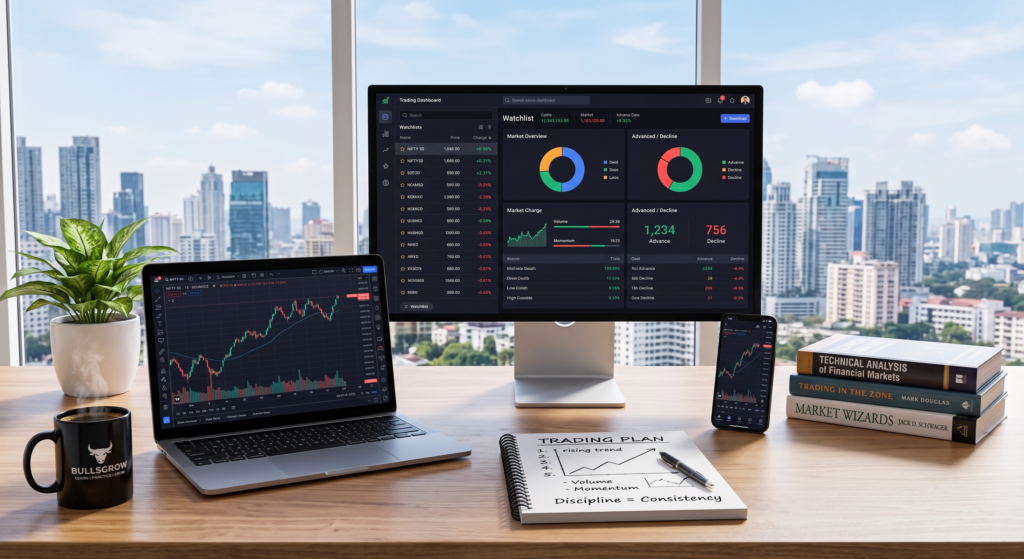
The stock market operates as a marketplace where buyers and sellers trade shares of publicly listed companies. Instead of meeting physically, these transactions take place electronically through stock exchanges such as the National Stock Exchange (NSE) and the Bombay Stock Exchange (BSE).
When an investor places a buy order and another investor places a matching sell order, the exchange automatically executes the trade. The ownership of the shares is transferred electronically through a Demat account, while the payment is processed through the trading account linked to your bank.
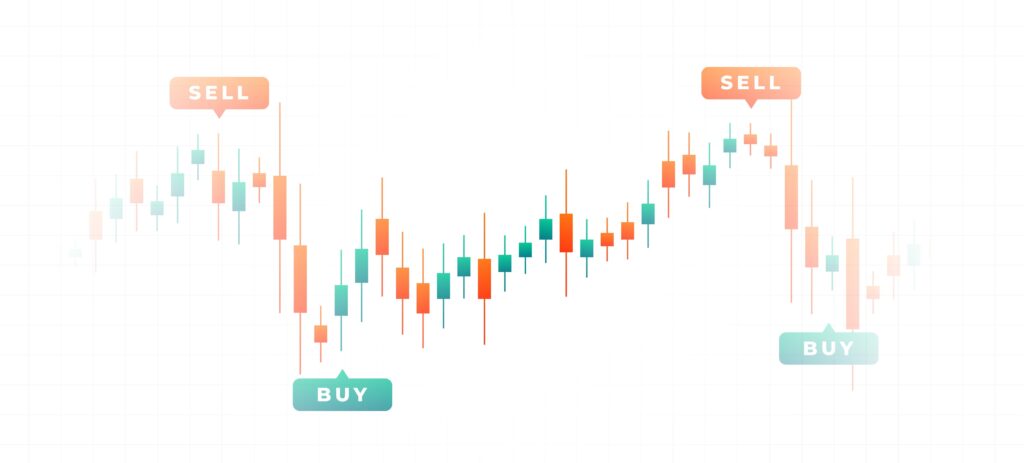
Stock prices constantly change throughout the trading day because of supply and demand. If more people want to buy a stock than sell it, the price generally rises. If more people want to sell than buy, the price usually falls. These price movements create opportunities for traders to earn profits, but they also involve risk.
Key Participants in the Stock Market
- Retail Investors
- Professional Traders
- Institutional Investors
- Stock Brokers
- Stock Exchanges (NSE & BSE)
- SEBI (Securities and Exchange Board of India)
How a Trade Happens: Step-by-Step
- A trader opens a Demat and Trading Account.
- The trader selects a stock to buy.
- A buy order is placed through the broker.
- The order reaches the stock exchange.
- The exchange matches a buyer and seller.
- The trade is executed.
- Shares are credited to the buyer’s Demat account.
- Money is transferred to the seller.
Understanding NSE and BSE
India has two major stock exchanges: the National Stock Exchange (NSE) and the Bombay Stock Exchange (BSE). Both provide a secure and transparent platform for buying and selling shares.
The NSE is known for its high trading volumes and is home to the Nifty 50 index. The BSE, established in 1875, is Asia’s oldest stock exchange and manages the Sensex index.
Although both exchanges allow investors to trade shares, they differ in listing requirements, trading volumes, and benchmark indices. Most leading companies are listed on both exchanges, allowing investors to trade conveniently through either platform.

Types of Stock Market Trading
Stock market trading is not limited to a single style. Traders choose different trading methods based on their goals, available time, risk tolerance, and experience. Understanding these trading styles helps beginners decide which approach best suits their personality and financial objectives.
Intraday Trading
Intraday trading involves buying and selling stocks on the same trading day. Traders aim to profit from short-term price movements without carrying positions overnight. While intraday trading offers quick opportunities, it also requires discipline, technical analysis, and proper risk management.
Swing Trading
Swing trading focuses on capturing price movements over several days or weeks. It is often considered more suitable for beginners because it provides enough time to analyze the market and make informed decisions without constantly monitoring charts throughout the day.
Positional Trading
Positional traders hold stocks for weeks or months based on long-term market trends. This approach combines technical analysis with fundamental research and is generally less stressful than short-term trading.
Delivery Investing
Delivery investing involves purchasing shares with the intention of holding them for the long term. Investors benefit from company growth, dividends, and long-term wealth creation rather than short-term price fluctuations.
Common Mistakes Beginners Make
- Trading without proper knowledge
- Ignoring risk management
- Investing based on social media tips
- Trading with emotions
- Overtrading
- Not using Stop Loss
- Expecting quick profits
- Investing money they cannot afford to lose
Tips for Beginners
- Start with learning before investing.
- Open a Demat and Trading Account with a trusted broker.
- Practice using a virtual or demo account when possible.
- Focus on risk management before profits.
- Keep a trading journal.
- Continue learning through books, courses, and market analysis.
Conclusion
Stock market trading offers exciting opportunities to build financial knowledge and long-term wealth, but success does not happen overnight. Every successful trader begins with a strong foundation, continuous learning, disciplined execution, and effective risk management.
Rather than chasing quick profits, beginners should focus on developing the right mindset and understanding how the market works before investing significant capital. The more knowledge and experience you gain, the more confident your trading decisions will become.
Ready to Start Your Trading Journey?
Reading blogs is a great way to understand the basics of stock market trading, but practical experience and expert guidance help you avoid common beginner mistakes.
At BullsGrow, we simplify trading education through structured courses, practical learning sessions, live classes, and mentor support designed for beginners as well as experienced traders.
Whether you’re starting your trading journey or looking to improve your skills, our goal is to help you learn with confidence and develop a disciplined approach to the financial markets.
